
From Foul Odours to Fresh Oxygen: How Two Women Brought Devlali's Dead Soil Back to Life!
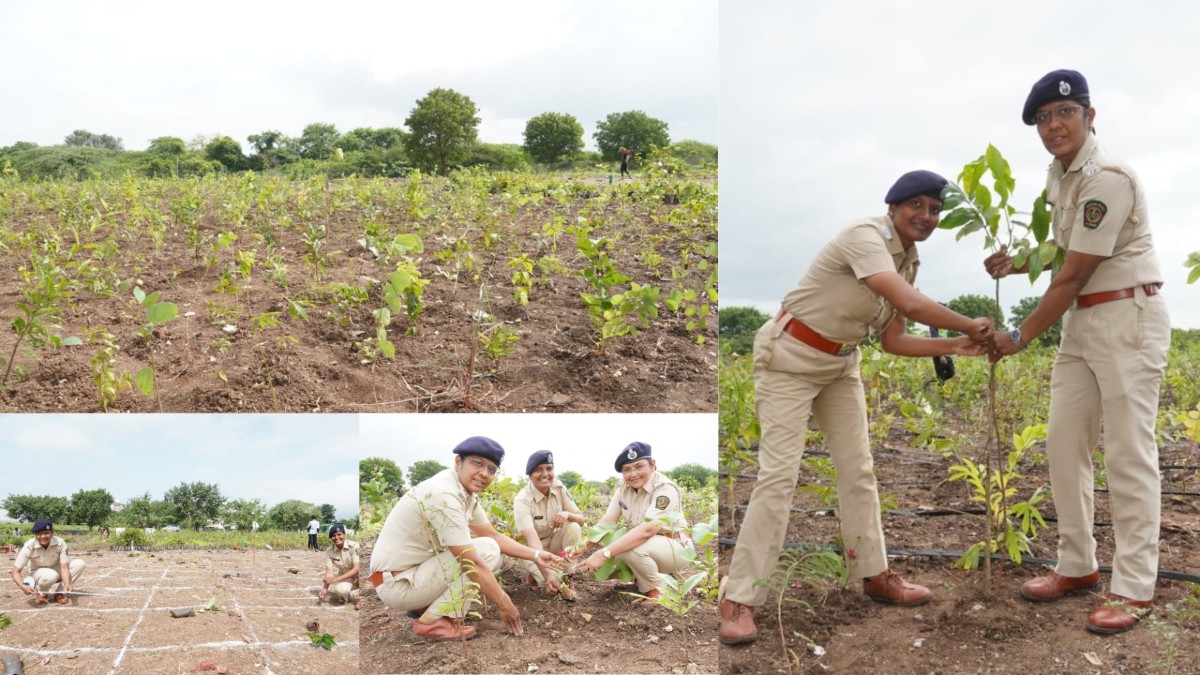
What was once a stinking dumping ground in Nashik's Devlali Cantonment, covered with plastic, household waste and toxic garbage, is steadily emerging as a thriving urban forest with 42,000 indigenous tree saplings.
The transformation has been driven by the Social Forestry Department, with Karuna Pagare and Suchita Patil playing a key role in reclaiming the severely degraded site. For years, accumulated garbage had turned the land into an environmental hazard, with toxic leachate from decomposing waste reportedly seeping into groundwater and nearby waterways. What appeared to be a lost cause has now become a promising green sanctuary.
The restoration began with an intensive clean-up operation. The accumulated garbage was excavated and transported to a proper municipal solid waste management facility. The underlying soil, badly compacted and deprived of nutrients after years of dumping, was excavated to a depth of one metre. It was subsequently enriched with cow-dung manure, paddy husk and quality compost to restore its fertility.
The reclaimed area covers two plots spread over 1.40 hectares. The project adopted Japan’s Miyawaki method of dense plantation, supported by protective fencing and a drip-irrigation network. The land was divided into one-metre-by-one-metre grids, with plantations planned across four ecological layers: canopy, large trees, sub-trees and shrubs to replicate the structure of a natural forest.
More than 40 native species have been planted, creating conditions for rapid growth and the development of a self-sustaining micro-forest. The initiative has also received support from the Devlali Cantonment administration, which provided the land for plantation and shifted waste disposal to a proper solid waste management facility. The emerging green belt is expected to contribute towards carbon absorption, cleaner air, lower local temperatures and improved moisture retention. The project has also created a habitat for birds, beneficial insects and other wildlife.



Comments (0)
No comments yet. Be the first.